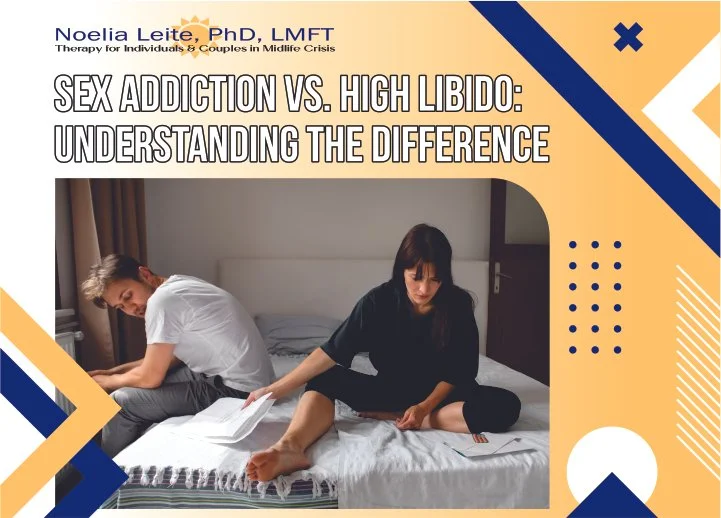
Sex Addiction vs. High Libido: Understanding the Difference
Searches for “pornography addiction” have increased dramatically in recent years. Many individuals and couples find themselves confused, distressed, or defensive when this term enters the conversation. A common question arises: Is this truly an addiction—or simply a high sex drive? Understanding the difference is essential, because mislabeling either can cause unnecessary shame, conflict, or ineffective treatment.
A high libido refers to a strong sexual desire. It is not inherently problematic. Sex addiction—or compulsive sexual behavior—is not defined by frequency alone, but by loss of control, escalation, and negative consequences.
High Libido: What It Is (and Isn’t)
Someone with a high libido:
Experiences strong sexual desire
Can enjoy pornography without secrecy or distress
Is able to stop or moderate use when desired
Maintains emotional intimacy and sexual connection with a partner
Does not require increasing intensity to feel satisfied
High libido becomes problematic only when it interferes with values, relationships, or functioning. Desire itself is not the issue—compulsion is.
Sex Addiction: Core Characteristics
Sex addiction is driven less by pleasure and more by regulation of internal states such as stress, anxiety, boredom, loneliness, or shame. Over time, the brain becomes conditioned to rely on sexual stimulation as a coping mechanism.
Key indicators include:
Loss of control despite repeated attempts to stop
Escalation in frequency, content, or risk
Secrecy, deception, or double life behaviors
Emotional detachment from a partner
Use of sex to numb or escape feelings
Continued behavior despite relational, emotional, or professional harm
Understand how couples therapy can help to address sexual issues

Identifying and controlling sex addiction
A Diagnostic Self-Assessment Checklist
You may want to reflect on the following questions:
Do I use sex to manage stress, emotions, or discomfort?
Have I tried to stop or cut back and failed repeatedly?
Has my use escalated over time in frequency or intensity?
Do I hide my behavior or lie about it?
Has my partner expressed pain, betrayal, or emotional disconnection?
Do I feel shame, despair, or anxiety after sex?
Has sex interfered with intimacy, work, or daily functioning?
Answering “yes” to several of these suggests compulsive behavior rather than high libido.
Why the Distinction Matters
Labeling a high libido as addiction can create unnecessary shame. Conversely, minimizing compulsive behavior as “just a high sex drive” delays healing and often deepens relational trauma. Accurate understanding leads to appropriate support, effective treatment, and reduced self-blame.
Recovery is not about suppressing sexuality—it is about restoring choice, integrity, and emotional presence.
The Role of a CSAT: Why Specialized Certification Matters in Recovery
The term CSAT (Certified Sex Addiction Therapist) frequently appears in searches by individuals and couples seeking help for compulsive sexual behaviors. This is not accidental. Sex addiction and betrayal trauma require specialized clinical training, and working with a generalist therapist can unintentionally cause harm.
What Is a CSAT?
A CSAT is a licensed therapist who has completed extensive post-graduate training through the International Institute for Trauma and Addiction Professionals (IITAP). This training includes:
Neurobiology of addiction
Compulsive sexual behavior assessment
Trauma-informed partner treatment
Attachment and intimacy repair
Structured recovery models
Ethical disclosure and boundary work
Learn more about tips for couples to improve the outcome of couples therapy

Always seek help from a certified sex addiction therapist
Why a Generalist Therapist May Miss the Mark
Many well-intentioned therapists lack specific training in sex addiction. As a result, they may:
Normalize compulsive sexual behavior prematurely
Encourage couples therapy too early
Minimize partner trauma
Frame the issue as mismatched libido or relationship dissatisfaction
Focus on communication while ignoring addiction dynamics
This can leave partners feeling invalidated and unsafe, while the addicted partner remains untreated.
What a CSAT Does Differently
A CSAT understands that sex addiction is not about sex—it’s about regulation, attachment wounds, and trauma. They provide:
Accurate assessment and diagnosis
Clear recovery structures
Accountability without shaming
Safety-focused treatment for partners
Coordination with groups and supports
Ethical handling of disclosure and boundaries
For partners, a CSAT validates betrayal trauma as real trauma—not insecurity, jealousy, or overreaction.
Why Specialized Care Creates Safety
Recovery requires containment, clarity, and expertise. A CSAT creates a therapeutic environment where:
Addicts are challenged and supported
Partners are believed and protected
Healing happens without re-traumatization
Both individuals receive appropriate, differentiated care
When it comes to sex addiction, specialization is not a luxury—it is a necessity.
Digital Infidelity: Is Sexting Considered Cheating?
In today’s digital world, infidelity no longer requires physical contact. Sexting, explicit messaging, secret social media accounts, and online emotional intimacy have become common sources of betrayal. A frequent question arises: Is sexting really cheating?
The answer depends less on the behavior itself and more on secrecy, intent, and impact.
Why Digital Betrayal Hurts So Deeply
Partners often feel confused and ashamed of their pain when discovering online affairs. Because there is “no physical contact,” they may be told they are overreacting. This is false.
The brain experiences emotional and sexual betrayal online in the same trauma centers as physical infidelity. The injury is real.
Read more: how to talk to your partner about starting couples therapy - tips from a couples therapist.

How to identify digital infidelity
What Makes Sexting Infidelity?
Digital behavior crosses into infidelity when it includes:
Sexual or romantic energy directed outside the relationship
Secrecy or deletion of messages
Emotional intimacy withheld from the partner
Boundary violations previously agreed upon
Rationalization or minimization afterward
Cheating is not defined by bodies—it is defined by broken trust.
The Trauma of “Virtual” Affairs
Partners often report:
Intrusive images and rumination
Loss of safety and reality confusion
Hypervigilance around devices
Deep grief and humiliation
The pain is not imaginary. It is betrayal trauma.
Rebuilding Boundaries in the Digital Age
Healing requires explicit conversations about:
Social media use
Messaging boundaries
Transparency and accountability
Device access during recovery
Definitions of fidelity
Assumptions no longer work in a digital world—agreements must be clear and mutual.
Final Thought
Digital infidelity is real. The hurt is valid. Healing begins when the pain is named, boundaries are respected, and accountability replaces defensiveness. In the modern age, fidelity is not just physical—it is emotional, digital, and relational.
See also: how group therapy can help heal betrayal trauma.
About the Author

Dr. Noelia Leite is a highly skilled integrative psychotherapist and relationship expert specializing in couples therapy, trauma recovery, sex addiction, and emotional healing. With a compassionate, evidence-based approach, Dr. Leite is dedicated to helping couples navigate complex emotional issues such as betrayal, trust rebuilding, and communication breakdowns. She also provides individualized support for those struggling with anxiety, depression, trauma, and self-esteem challenges, ensuring her clients feel seen, supported, and empowered.
Dr. Leite's practice blends evidence-based therapeutic methods with a client-centered approach, fostering profound personal growth and stronger relational bonds. She holds a Ph.D. in Mind-Body Medicine specializing in Integrative Mental Health and a Master's in Marriage and Family Therapy and Health Psychology. Dr. Leite is a licensed marriage and family therapist, certified sex addiction therapist, and betrayal trauma therapist. Her credentials also include advanced certifications in clinical hypnotherapy, yoga instruction and therapy, and biopsychology. Additionally, she serves as a state supervisor, mentoring fellow mental health professionals.
Throughout her career, Dr. Leite has worked internationally, providing therapy to individuals, couples, families, professionals, and groups in diverse, multicultural environments, including universities, hospitals, mental health service centers, and public and private sectors. She is also an accomplished academic, collaborating on scientific research projects and contributing to peer-reviewed articles and publications.
Dr. Leite offers in-person and online sessions based in Miami and across Florida. Her mission is to help clients break free from negative patterns—such as toxic relationships, limiting beliefs, and unresolved trauma—that contribute to emotional and physical distress. For more information, visit her website.