
Shame and Sexual Addiction: Why Willpower Alone Is Never Enough
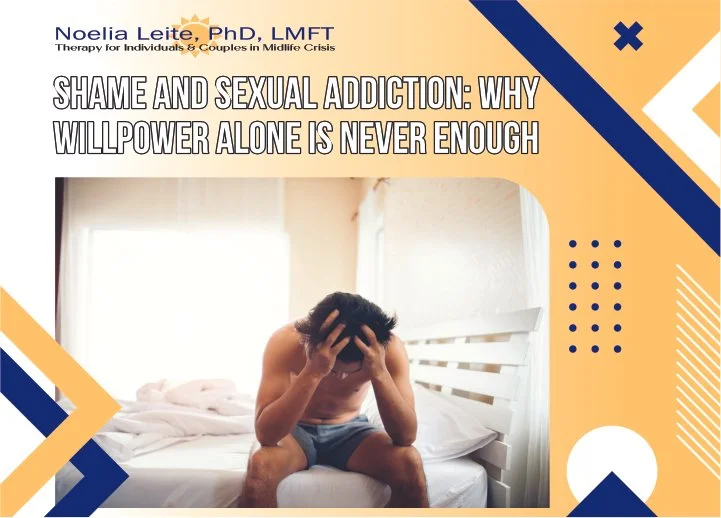
If you've ever promised yourself, for the tenth time, the hundredth time, that this is the last time, and then found yourself right back where you started, you already know something important: willpower is not the problem.
You are not weak. You are not broken beyond repair. You are not a bad person who simply lacks discipline.
What you are, almost certainly, is someone caught in a cycle that runs far deeper than behavior — a cycle driven by one of the most powerful and least-talked-about forces in addiction: shame.
This article is for anyone searching for real answers about how to stop porn addiction, understand compulsive sexual behavior, or find a path toward porn addiction recovery that actually works. Because the standard advice — just stop, just try harder, just have more self-control — was never going to be enough. Here's why.
What Is Compulsive Sexual Behavior — and Is It Really an Addiction?
Compulsive sexual behavior (sometimes called sexual addiction or hypersexual disorder) refers to a pattern in which sexual thoughts, urges, or behaviors feel out of control, interfering with relationships, work, mental health, and self-worth.
For many people, this shows up as:
Compulsive pornography use despite repeated attempts to stop
Escalating content that feels increasingly disconnected from personal values
Using sexual behavior to cope with stress, loneliness, anxiety, or depression
Shame spirals after acting out, followed, eventually, by the same behavior again
The debate about whether this constitutes a "true" addiction in the clinical sense continues among researchers. But here's what matters most practically: the cycle looks and feels like addiction. Craving. Using. Temporary relief. Shame. Resolve. Relapse. Repeat.
And at the center of that cycle, almost always, is shame.
Understand The Impact of Sex Addiction on Partners: Supporting Loved Ones Through Sex Addiction Therapy.

Shame can fuel sexual addiction. Recovery starts by understanding the cycle.
The Shame-Addiction Loop Nobody Talks About
Here is the cruel irony at the heart of shame and sexual addiction: shame doesn't stop the behavior. It fuels it.
When someone acts out sexually — watches pornography they swore they wouldn't watch, crosses a line they drew for themselves — the behavior is followed almost immediately by a wave of shame. I'm disgusting. Something is wrong with me. No one can know about this. I have to stop.
That shame is painful. Genuinely painful — in the same way physical pain is painful. And the brain, wired to seek relief from pain, reaches for the fastest available source of comfort, escape, or numbing.
Which is often the very behavior that caused the shame in the first place.
This is the loop. Shame triggers the urge. The urge leads to the behavior. The behavior produces more shame. And the cycle tightens.
Willpower operates on the surface of this loop. It can interrupt the behavior momentarily — but it does nothing to address the underlying pain driving it. This is why people with enormous intelligence, professional success, and genuine moral conviction still find themselves unable to stop through sheer determination alone.
You cannot white-knuckle your way out of a shame spiral.
Common Sources of Shame
Understanding the roots of shame is not about making excuses — it's about finding the actual source of the problem so it can actually be treated.
For many people struggling with compulsive sexual behavior, shame didn't start with the behavior. It started long before it.
Early experiences that plant the seeds of shame often include:
Growing up in environments where emotions were not safe to express
Experiencing childhood neglect, abuse, or emotional unavailability from caregivers
Receiving explicit or implicit messages that sexuality itself is dirty or sinful
Developing an insecure attachment style that makes intimacy feel unsafe
Living with undiagnosed anxiety, depression, or trauma
When emotional pain has nowhere to go — when a child learns that vulnerability gets punished, that feelings are weakness, that they must perform okayness — the nervous system finds other outlets. For many, sexual stimulation becomes one of the earliest and most reliable ways to self-soothe.
By the time the behavior is recognized as a problem, it is already deeply wired into the brain's stress-response system. That's not a moral failing. That's neuroscience.
See also: Understanding the Causes and Consequences of Sex Addiction.

Willpower alone may not break the cycle of compulsive sexual behavior.
Why "Just Stop" Doesn't Work — and What Does
The reason porn addiction recovery efforts so often fail is that they focus exclusively on stopping the behavior — without addressing what the behavior is doing for the person.
Every compulsive behavior serves a function. It might be:
Escaping emotional pain, boredom, or overwhelm
Regulating a nervous system that never learned to calm itself another way
Simulating intimacy for someone who finds real intimacy terrifying
Punishing oneself in a way that confirms a deep belief of unworthiness
Until those underlying needs are met in healthier ways, removing the behavior just creates a vacuum — and the brain will fill that vacuum with something.
Take the opportunity to check out advice from a therapist specializing in sex addiction.
Effective porn addiction recovery addresses multiple layers simultaneously:
1. Reducing Shame — Not Adding to It
Counterintuitively, recovery begins not with condemnation of the behavior but with compassion toward the person doing it. This doesn't mean excusing harm caused to partners or oneself. It means recognizing that shame-based approaches to recovery (punishment, self-flagellation, rigid moral frameworks without emotional support) consistently backfire. The more someone hates themselves for a behavior, the more they need to escape that self-hatred — and the cycle continues.
2. Building Emotional Regulation Skills
If sexual behavior has been functioning as an emotional regulation tool for years or decades, the brain needs replacement tools — not just a void. Therapy focused on compulsive sexual behavior help teaches concrete skills: identifying emotional triggers before they escalate, tolerating distress without immediately acting on it, and building a broader emotional vocabulary.
3. Healing the Attachment Wounds Underneath
For many people, compulsive sexual behavior is ultimately a story about disconnection — from others, and from themselves. Relational trauma and insecure attachment patterns often lie at the core. Therapy that addresses these wounds — not just the surface behavior — creates the conditions for lasting change.
4. Rebuilding Identity Beyond the Addiction
Long-term recovery involves constructing a sense of self that is not organized around shame, secrecy, or compulsion. This is slow work. It involves reconnecting with values, rebuilding relationships, and developing an honest, non-shaming relationship with one's own sexuality.

Healing sexual addiction requires compassion, accountability, and deeper emotional work.
What to Look for in a Therapist
If you're searching for help with shame and sexual addiction, not every therapist is equipped for this specific territory. Look for:
Training in compulsive sexual behavior or sex addiction (CSAT certification is one indicator)
A non-shaming, non-judgmental approach — you should feel safer in the room, not more ashamed
Familiarity with trauma and attachment, not just behavioral strategies
Experience with partners and couples if relationship repair is part of the goal
Individual therapy is often the starting point. Group therapy — particularly structured recovery groups — can also be profoundly healing, because one of shame's greatest powers is secrecy. Being witnessed by others who understand, without being condemned, is itself part of the cure.
You Are More Than the Worst Thing You've Done in Private
The path forward from compulsive sexual behavior is not about becoming someone who has perfect control. It's about becoming someone who no longer needs the escape as desperately — because the underlying pain has somewhere to go.
That transformation is entirely possible. It happens in therapy offices and recovery groups every day. It happens slowly, and it happens with support — not through isolated willpower and a white-knuckled promise to do better.
If you've been carrying this alone, under layers of secrecy and self-loathing, the most courageous thing you can do right now is reach out. Not because you owe anyone your story. But because you deserve to live outside the loop.
See also our guide about Stay or Leave? How to Make the Most Important Decision After Betrayal.
About the Author

Dr. Noelia Leite is an integrative psychotherapist and relationship specialist whose work sits at the intersection of trauma recovery, emotional healing, and advanced couples therapy. With deep expertise in betrayal trauma, sex and multiple
addictions, attachment injuries, and complex relational dynamics, she helps couples navigate some of the most painful and destabilizing experiences—rebuilding trust, restoring intimacy, and creating healthier patterns of connection.
She also works extensively with individuals facing anxiety, depression, trauma, identity challenges, and self-worth concerns, offering a compassionate, evidence‑based approach that supports both emotional and physiological healing. Her clinical style blends neuroscience, mind‑body medicine, attachment theory, and experiential therapies, creating a grounded and empowering therapeutic experience.
Dr. Leite holds a Ph.D. in Mind‑Body Medicine with a specialization in Integrative Mental Health, as well as Master degrees in Marriage and Family Therapy and Health Psychology. She is a Licensed Marriage and Family Therapist (LMFT) in several states in the USA, and a licensed clinical and counseling psychologist in Brazil and the United Kingdom. Dr. Leite has numerous years of international practice—including clinical work in Brazil, the United Kingdom, Singapore, Malasia, and Argentina—and expanded her expertise in the United States, deepening her specialization in couples therapy, multiple addictions, trauma treatment, and integrative mental health.
Dr. Leite’s clinical work spans diverse countries and cultural settings, including universities, hospitals, community mental health centers, and both public and private practice. Having lived and worked in several countries—and traveled to nearly 100—she brings a multicultural, philosophically grounded, and spiritually informed perspective to therapy. These experiences deepen her insight into relationships, identity, and healing across cultures.
Her contributions to scientific research and peer‑reviewed publications are recognized in the academic community. She is also a state‑approved supervisor and provides therapy in English, Spanish, and Portuguese.
Based in Miami, Florida, Dr. Leite offers both in-person and online therapy. She helps individuals, couples, and professionals move beyond toxic relationship patterns, unresolved trauma, and limiting emotional cycles to build greater self-awareness, healthier relationships, and lasting well-being. Learn more about Dr Leite.