Why Culture Matters When Finding a Therapist in Miami
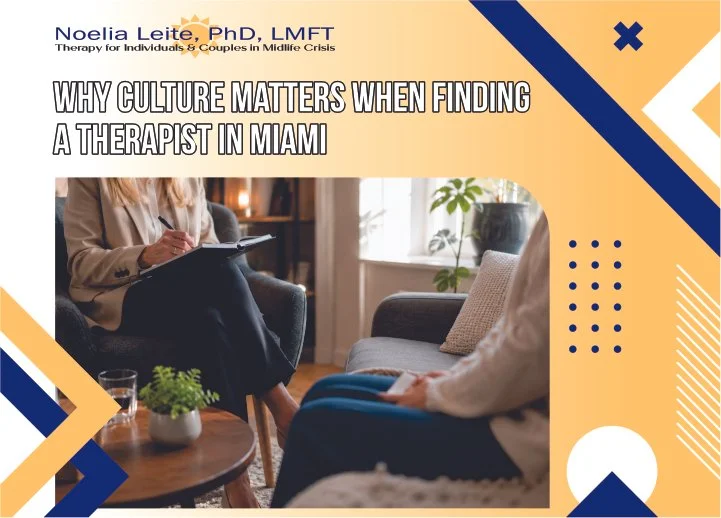
Miami is one of the most culturally diverse cities in the United States. For many residents—especially those from Latin American backgrounds—Spanish or Portuguese is the language spoken at home, with family, and during emotionally meaningful moments. Yet when it comes to therapy, many people still seek help in English, even when it is not their native language.
While therapy can certainly be effective in any language, culture and language play a powerful role in how people express emotions, process experiences, and build trust with a therapist. For Spanish and Portuguese speakers living in the U.S., finding a culturally competent therapist who understands both language and cultural background can significantly improve the therapeutic experience.
The Power of Expressing Emotions in Your Native Language
Emotions are deeply connected to language. The words we first learn to describe feelings—love, shame, fear, guilt, longing—are usually learned in childhood, within our cultural environment.
For many immigrants or first-generation individuals, English may be the language of work, school, or daily transactions, but not necessarily the language of vulnerability.
When therapy happens in a second language, clients often find themselves:
Struggling to find the right emotional words
Simplifying complex experiences
Feeling mentally exhausted from translating thoughts
Avoiding deeper topics because they are harder to articulate
Speaking in one's native language allows emotions to flow more naturally. Clients often report that they can access memories, feelings, and personal stories more easily when they do not have to mentally translate their experiences.
For example, certain words or expressions in Spanish or Portuguese capture emotional nuance that English simply does not replicate. A phrase like “me duele el alma” (my soul hurts) or “saudade” in Portuguese carries layers of emotional meaning that can be difficult to fully translate.
In therapy, these nuances matter. They allow a therapist to better understand the emotional landscape of the person sitting in front of them.

Native language helps emotions flow naturally in therapy.
Culture Shapes How We Understand Mental Health
Language is only part of the picture. Culture also influences how people view relationships, family roles, emotional expression, and even mental health itself.
Many Latin cultures emphasize values such as:
Familismo (strong family loyalty and involvement)
Respect for elders and authority
Collective decision-making rather than individual focus
Privacy around personal struggles
These cultural values can shape how people approach therapy.
For instance, someone raised in a Latin household may feel conflicted discussing family conflicts with a therapist because they were taught that family matters should stay private. Another person may feel guilt about setting boundaries with parents because loyalty and sacrifice are deeply embedded cultural values.
A therapist who understands these cultural dynamics can help clients navigate these internal conflicts without dismissing or misunderstanding their cultural background.
Without that cultural awareness, therapy can sometimes unintentionally create misunderstandings.
For example, a therapist unfamiliar with Latin family structures might interpret close family involvement as “enmeshment,” when in reality it may simply reflect cultural norms around support and connection.
Immigration and Identity Challenges
Living between cultures can create unique emotional challenges.
Many Spanish and Portuguese speakers in Miami are immigrants or children of immigrants. This experience often brings complex emotional layers such as:
Acculturation stress
Identity conflicts between cultures
Pressure to succeed in a new country
Language barriers
Fear related to immigration status
Separation from extended family
Additionally, many individuals feel the weight of being the “bridge” between cultures—translating for family members, navigating systems their parents cannot, or balancing traditional cultural expectations with American social norms.
These experiences are not always visible on the surface, but they can deeply impact mental health.
A therapist who understands immigrant experiences and bicultural identity can help clients process these challenges with empathy and insight.
See also: Sexual Anorexia - When Withholding Intimacy Becomes a Weapon.

Cultural understanding strengthens trust between therapist and client.
Cultural Sensitivity Builds Trust
Trust is the foundation of therapy. For many people from minority or immigrant communities, seeking therapy already requires overcoming stigma or skepticism.
In some Latin cultures, mental health struggles may be minimized or explained through phrases like “échale ganas” (“just try harder”) or “no es para tanto” (“it's not that big of a deal”). Therapy might even be seen as something only for people with severe mental illness.
Because of this stigma, many individuals approach therapy cautiously.
When a therapist demonstrates cultural understanding—whether through language, familiarity with cultural values, or awareness of common immigrant experiences—it often creates a sense of safety.
Clients may feel:
More understood
Less judged
More willing to open up
More comfortable discussing sensitive topics
This cultural connection can make the difference between a client staying in therapy long enough to experience meaningful change or dropping out early.
Expertise Still Matters
While cultural understanding is important, it does not replace professional training and expertise.
The ideal therapist offers both: strong clinical skills and cultural competence.
This means a therapist who not only understands the psychological aspects of issues like anxiety, trauma, depression, or relationship conflict, but also recognizes how culture influences how those issues show up in a person's life.
For example, a culturally competent therapist may understand how:
Gender roles in certain cultures affect relationship expectations
Immigration stress contributes to anxiety or burnout
Religious or spiritual beliefs influence coping styles
Family loyalty impacts boundary setting
When therapy integrates both clinical expertise and cultural understanding, the work becomes more relevant and meaningful for the client.
Understand how it works The Ultimate Guide to Recovering from Betrayal Trauma.

Culturally competent therapy supports deeper healing in Miami.
Miami: A Unique Cultural Landscape
Miami’s cultural diversity makes it a unique environment for therapy.
Spanish is heard everywhere—from coffee shops to business meetings—and Portuguese communities, particularly from Brazil, continue to grow. Yet despite this linguistic diversity, not all mental health services are equally accessible in these languages.
For many people, finding a therapist who speaks their native language and understands their cultural context can transform therapy from something intimidating into something empowering.
Final Thoughts
Therapy is ultimately about feeling seen, understood, and supported while navigating life's challenges. Language and culture play a critical role in that process.
For Spanish and Portuguese speakers living in Miami, choosing a therapist who understands their cultural background can make it easier to express emotions, explore complex family dynamics, and process the unique experiences that come with living between cultures.
When therapy honors both psychological expertise and cultural identity, it creates a space where healing can truly begin.
Also read the article: Sex Addiction vs. High Libido - Understanding the Difference.
About the Author

Dr. Noelia Leite is an integrative psychotherapist and relationship specialist whose work sits at the intersection of trauma recovery, emotional healing, and advanced couples therapy. With deep expertise in betrayal trauma, sex and multiple
addictions, attachment injuries, and complex relational dynamics, she helps couples navigate some of the most painful and destabilizing experiences—rebuilding trust, restoring intimacy, and creating healthier patterns of connection.
She also works extensively with individuals facing anxiety, depression, trauma, identity challenges, and self-worth concerns, offering a compassionate, evidence‑based approach that supports both emotional and physiological healing. Her clinical style blends neuroscience, mind‑body medicine, attachment theory, and experiential therapies, creating a grounded and empowering therapeutic experience.
Dr. Leite holds a Ph.D. in Mind‑Body Medicine with a specialization in Integrative Mental Health, as well as Master degrees in Marriage and Family Therapy and Health Psychology. She is a Licensed Marriage and Family Therapist (LMFT) in several states in the USA, and a licensed clinical and counseling psychologist in Brazil and the United Kingdom. Dr. Leite has numerous years of international practice—including clinical work in Brazil, the United Kingdom, Singapore, Malasia, and Argentina—and expanded her expertise in the United States, deepening her specialization in couples therapy, multiple addictions, trauma treatment, and integrative mental health.
Dr. Leite’s clinical work spans diverse countries and cultural settings, including universities, hospitals, community mental health centers, and both public and private practice. Having lived and worked in several countries—and traveled to nearly 100—she brings a multicultural, philosophically grounded, and spiritually informed perspective to therapy. These experiences deepen her insight into relationships, identity, and healing across cultures.
Her contributions to scientific research and peer‑reviewed publications are recognized in the academic community. She is also a state‑approved supervisor and provides therapy in English, Spanish, and Portuguese.
Based in Miami, Florida, Dr. Leite offers both in-person and online therapy. She helps individuals, couples, and professionals move beyond toxic relationship patterns, unresolved trauma, and limiting emotional cycles to build greater self-awareness, healthier relationships, and lasting well-being. Learn more about Dr Leite.